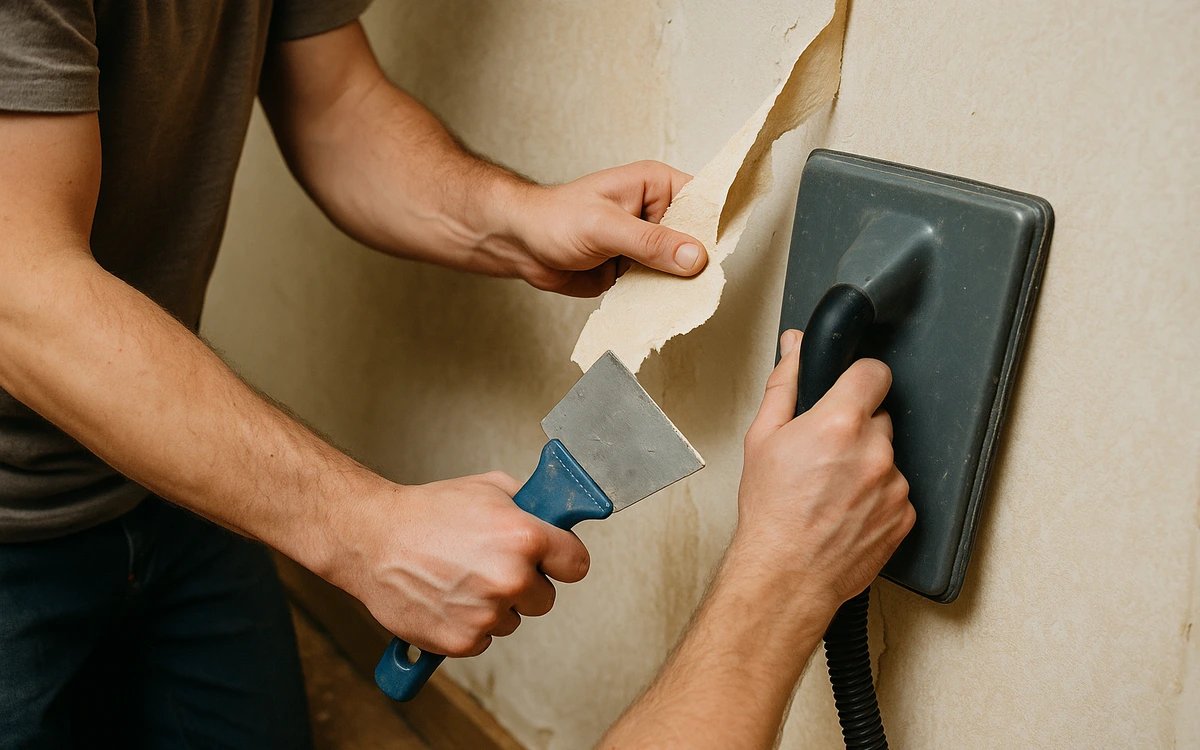
We provide professional wallpaper removal services nationwide, removing stubborn layers, breaking down heavy glue buildup, and repairing wall surfaces when needed to leave them ready for paint or new wall coverings. Request a quote today.
What Are the Signs Your Walls Actually Need Wallpaper Removal?
If the same wallpaper problems keep coming back after cleaning or light scraping, the issue usually goes deeper than surface dirt. Aging paper, failing adhesive, trapped moisture, and weakened wall surfaces can all keep the wallpaper from staying flat or allow hidden damage to spread. In many homes, these symptoms show up gradually, then start accelerating once humidity changes or previous patch jobs begin to fail. When that happens, wallpaper removal is usually the most reliable way to get back to a sound surface for painting, skim coating, or installing new coverings. The signs below are some of the clearest indicators that the paper and paste are no longer stable and that the wall needs more than a cosmetic touch-up.
- Peeling edges that lift with light pressure
- Bubbles or blisters that appear after humid days
- Dark stains or rust-like marks showing through the wallpaper
- Wallpaper seams separating in long straight lines
- Soft or crumbly wall surface after scraping
Does Soft or Crumbly Wall Surface After Scraping Mean the Wall Is Done?
Soft or crumbly wall material after scraping does not automatically mean the wall is beyond repair, but it usually does mean the surface underneath the wallpaper has weakened. In many cases, the paste and paper bond so tightly to the top layer of drywall compound, plaster, or old paint that removal pulls loose material away with it. At that point, the wallpaper is no longer just a finish layer. It is attached to a substrate that is already failing, which means continued dry scraping can create larger damaged areas and make the final repair more involved. The right approach is usually to slow down the removal process, strip the remaining wallpaper carefully, and then evaluate how deep the damage goes before patching, sealing, and refinishing. Once the loose material is removed and the wall is stabilized, most surfaces can be rebuilt into a solid base again. What matters is not whether the wall shed a little during scraping, but whether the remaining surface can be firmed up enough to hold primer, patching material, and a finished coating.
- It often points to failed drywall mud, plaster, or paint under the wallpaper
- Aggressive scraping can widen the damaged area instead of solving it
- Careful removal helps limit additional tearing of the wall face
- Repairs usually include patching, sealing, sanding, and surface prep
- A stable wall surface is necessary before painting or re-covering
Why Does Wallpaper Start Peeling at the Edges First?
Peeling edges are often one of the first visible signs that wallpaper is losing its bond to the wall. Seams and perimeter edges are naturally more vulnerable because they are the thinnest points in the installation and the easiest places for moisture, air movement, or cleaning residue to work underneath the paper. Once that bond starts to weaken, even light contact can make the edges curl, lift, or fray. In some homes, this happens because the original adhesive is aging out. In others, it happens because the wall behind the wallpaper was not properly primed, or because repeated humidity changes have expanded and contracted the paper over time. While a small loose edge can sometimes be reset temporarily, widespread edge failure usually means the wallpaper system as a whole is breaking down and needs to be removed for a lasting fix.
- Edges and seams are common weak points in older wallpaper installations
- Humidity can loosen adhesive and make edges curl outward
- Poor priming underneath wallpaper often leads to premature lifting
- Cleaning products or repeated wiping can weaken seam adhesion
- Widespread peeling usually points to full removal rather than spot repair
What Causes Bubbles or Blisters to Show Up After Humid Weather?
Bubbles and blisters that become more noticeable after humid weather usually indicate that moisture is affecting either the wallpaper itself, the adhesive behind it, or the wall surface underneath. When indoor humidity rises, wallpaper can expand slightly, and weakened adhesive can lose grip in isolated spots. That creates raised areas where the paper is no longer lying flat against the wall. In some situations, the problem is limited to old glue that has broken down over time. In others, it can suggest moisture migration through the wall, especially in bathrooms, kitchens, laundry rooms, or exterior-facing walls. Because those raised sections rarely flatten permanently on their own, recurring bubbles are often a sign that removal is the better long-term solution. Taking the wallpaper down allows the wall to dry properly, exposes any hidden staining or deterioration, and gives you a better chance of preventing the issue from returning under paint or new paper.
- Humidity can cause wallpaper to expand and highlight weak adhesion
- Aging paste may release in patches and form raised blisters
- Recurring bubbles can indicate hidden moisture behind the paper
- Bathrooms, kitchens, and exterior walls are common problem areas
- Removal helps expose and correct the cause before refinishing
Are Dark Stains Showing Through Wallpaper a Sign of Hidden Damage?
Dark discoloration or rust-like marks bleeding through wallpaper often point to a condition behind the surface rather than a stain on the face of the paper. The source may be old water intrusion, adhesive breakdown, metal fasteners reacting to moisture, mildew-related spotting, or previous repairs that were never properly sealed. Wallpaper can hide these issues for a while, but once staining starts telegraphing through, it usually means the material is no longer acting as a clean, stable finish. Painting over wallpaper in that condition rarely solves the problem for long because the stain source can continue to migrate. Removing the wallpaper is often the clearest way to inspect what is happening underneath, determine whether the wall is dry and sound, and apply the right stain-blocking or repair products before refinishing.
- Stains can come from moisture, metal bleed, mildew, or old repairs
- Visible bleed-through often means the issue is behind the wallpaper
- Painting over stained wallpaper usually does not address the source
- Removal allows inspection, drying, and proper sealing of the wall
- Identifying the cause first helps prevent stains from returning
Can You Paint Over Wallpaper Instead of Removing It?
Painting over wallpaper is sometimes possible, but it is rarely the best option when the paper is already peeling, bubbling, separating at the seams, or showing signs of wall damage underneath. Paint adds weight and moisture during application, which can make weak seams lift further and can lock surface defects in place. It also does nothing to correct failing adhesive, hidden stains, or soft wall areas caused by the wallpaper removal process already beginning on its own. In limited cases, firmly bonded wallpaper in a dry, stable room may be paintable after cleaning, seam repair, and priming. But when multiple warning signs are present, removal is usually the safer path because it lets you correct the surface at the source rather than trying to cover over an unstable finish. For most problem walls, proper removal followed by repair and sealing produces a cleaner, longer-lasting result.
- Paint can worsen loose seams and surface irregularities
- It will not fix failing adhesive or hidden wall damage
- Stable wallpaper in limited conditions may sometimes be paintable
- Problem wallpaper usually performs better when removed completely
- Removal and repair create a stronger base for the final finish
How Much Does Wallpaper Removal Cost in Birmingham, AL?
Wallpaper Removal in Birmingham, AL typically costs between $604 and $1,953 per room for full removal and surface prep, since labor depends on the number of layers and whether the paper needs soaking or chemical softening. Pricing also varies with wall condition and finish-prep requirements, because softened paste can lift drywall facing or plaster, making patching, sealing, and sanding necessary before paint. Complex rooms with high ceilings, extensive trim, and tight access behind built-ins usually increase the workload.